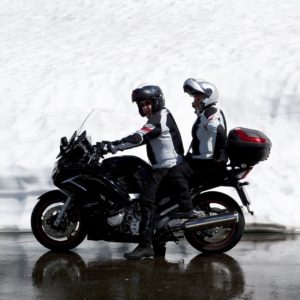
For most motorcyclists, there will come the day when you’re going to carry the most precious luggage possible with you on your ride. Said luggage will be another human, as soft and squidgy as you are. When that day comes, you’re going to need to know a few things before you get going. Here I’ve outlined my two up tips for riding with a pillion, based on common knowledge, as well as my personal experience.
Preparation - Two Up Tips
Gear
All the gear, all the time! That goes for everyone who’ll be sitting on the motorcycle – rider and pillion. A helmet is the only legal requirement in the UK, but all the other gear should be taken just as seriously. Logically, a pillion should be wearing as decent protection as the rider. Like I said, they’re as susceptible to injury, so why wouldn’t you minimise that risk? Armoured jackets, riding boots, protective bottoms and strong gloves are all essential for maximum safety.
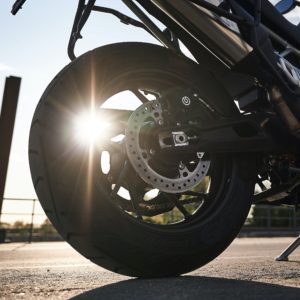
More weight on the bike will require more pressure in the tyres. This will vary between bikes, and be somewhat determined by the weight of the pillion. Roughly, an additional 3-4 psi will suffice, but it’s best to check for your particular motorcycle model.
Inflate Your Tyres Slightly
Suspension
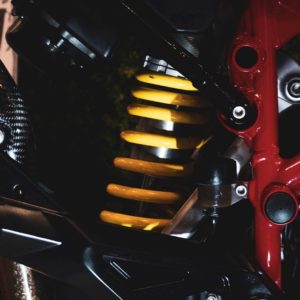
More weight also means more preload. Adding load makes the spring harder to compress, and therefore maintains the bike’s geometry. This will alter the ‘sag’ of the rear end, and allow the tyres to maintain proper contact with the road.
Adjust Your Preload
Most bikes will have adjustable suspension, and some modern bikes will include electronic settings to accommodate a pillion. Again, depending on the bike and the weight of the pillion, the perfect preload can affect the handling, the headlight, and the bumpiness of the ride.
Lights & Mirrors
Once the tyres are taut, and the suspension is set, you may need to re-adjust the angle of your headlight. It could be aiming skyward, which is useless for you, and harmful for other road users. Lower the slant, so it illuminates the road in front.
Realign Your Headlight & Mirrors
Not all people think of the next point – but check your mirrors too! I’ve ridden with a person on the back and not thought to check my mirrors before setting off. The image wasn’t as abstract as a Picasso painting, but I definitely needed to tilt them upward slightly.
Communications
Another overlooked preparation, crucial for a safe ride. Before either of you mount the bike, take the time to arrange how you’ll communicate with one another. It’s not an easy task when travelling at high speed with two helmets to muffle your words, so decide on simple hand gestures, or taps on the shoulder. Either that, or invest in a pair of Bluetooth headsets.
Whatever you choose, don’t become distracted by your communications. Clear, concise messages are better, and longer chats should be saved for when you’re stopped, or off the bike.
What To Expect From The Bike - Two Up Tips
Braking
Heavier objects take longer to slow down, so factor in a further braking distance when riding with a pillion – especially on wet surfaces. Make the process gradual too. Avoid sudden braking, as momentum will thrust your pillion into your back, which will in turn, shift you toward the handlebars.
Accelerating
Surprise, surprise, heavier objects also take longer to speed up! Similarly to braking, make this process gradual and never sudden. If your bike is powerful enough, it will chuck you both off the back like a bucking stallion. Ease on the throttle, and shift up through the gears smoothly.
Instantaneous braking, accelerating and gear changes, will jolt the pillion. This can lead to the infamous ‘helmet bumps’, or much worse. To avoid this annoyance, or danger, aim for velvety smoothness by anticipating distances, and taking your time.
Steering
To some degree, the weight being added to the back of your bike will lift the front end. This can cause your steering to feel ‘light’ and less responsive than it usually is. Adapt your riding to this, and take your corners with extra caution to account for this lessened standard of handling.
Try To Avoid Doing This With A Pillion
Mounting & Dismounting - Two Up Tips
Hopping On
As the rider, you have control of the motorcycle at all times. This makes you the boss. Pillions should only hop on and off when you say it is okay to do so. This way you can stabilise yourself properly, and expect the shift in weight as your pillion mounts.
Make sure you have both feet flat on solid ground, where you won’t slip. Avoid drains, oil, road paint, gravel etc. I recommend having your kickstand down too, for extra security. When your pillion is ready to jump on, have them prepare both foot mounts. Then, they can step onto the left mount, whilst holding your left shoulder for balance if necessary.
As they swing their right leg over, make sure they’re mindful not to damage your indicators. Mine stick out, but on other bikes this won’t be an issue.
Plant Feet Firmly On Suitable Surface
Hopping Off
Being at a complete stop before your pillion dismounts is pretty obvious. Remember to let them know when you’re ready for them to hop off ie. both your feet are down (ideally the kickstand as well), you’re well balanced, and on a suitable surface. Don’t rush, even if you’re in desperate need of a bathroom.
Your pillion should always get on the motorcycle after you, and off before you. Also, be aware that slow manoeuvres are much more difficult with someone on the back! If you can, do them before they mount, or let them safely dismount first.
Pillion Position - Two Up Tips
Seating
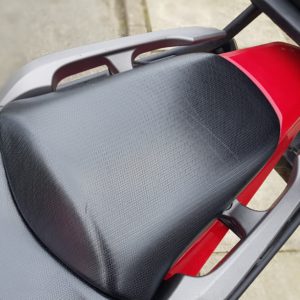
There are three things that can make a seat comfortable – size, angle, and padding. Generally, a pillion seat is padded similarly to the rider’s, and will be cushioned adequately.
However, the sizes and angles of pillion seats range quite a bit. Sports bikes tend to have tiny stamp sized spaces that slope awkwardly. These are poor for pillions in comparison to other types of bikes’, as they’ll be forced to balance like a tipsy Humpty Dumpty atop your crotch rocket.
Flat, Padded Seat With Grab Rails
Huge Harley-Davidsons and Honda Gold Wings have enough real estate to park a bus on, and these are the best types of pillion seat. Sizes will vary in between these styles, so consider your pillion’s comfort and safety before asking them to jump on the back.
Holding On
With a pillion on board, you should be riding in a manner that doesn’t require them hold on for dear life. Regardless, they may still want to hold on for peace of mind and steadiness. In this case, grab rails become a desirable asset. Although the pillion can always hold on to you as an alternative, this can be bothersome as a rider, and uncomfortable as a pillion. Grab rails allow the pillion to relax, as well as change their posture and position, without hindering the rider.
Back Support
Ask yourself if you prefer sitting on a stool or a chair. Now you know why back supports makes all the difference to a pillion. Most motorcycles won’t come with backrests unless they are big tourers, or special exceptions. This doesn’t mean you can’t have one.
Other than fitting a backrest as an accessory, you can invest in a top box which will act as a sufficient substitute. My Shad top box even had the option to buy a small padded backrest with it, which was simply attached with a couple of screws. For the extra bit of dough, I got myself a priceless piece of luggage, with the added benefit of a backrest. Now my pillion can lean back, and I don’t have to worry about them sliding off!
Top Box With Backrest
Foot Pegs
Lastly, your pillion is going to need to be able to rest their feet on a decent pair of pegs. It’s no good them dangling around like loose spaghetti. For maximum comfort, a pair that allow for flex in the knees are best. No-one wants to have their legs bunched up and tucked in over long distances. Flat angled pegs with some form of grip are also preferable, as they’ll help the pillion stay put.
Grippy Foot Peg
While Riding - Two Up Tips
Pillion - Two Up Tips
To be a cooperative pillion, there are a few things to remember:
• Careful of the exhaust. It gets very hot, and it can burn your leg! • Be limber not lumber. Always lean with the rider, and avoid statuesque stillness. • Don’t fidget, wiggle or shift your weight often. It can throw the bike off balance. • Anticipate changes of speed at junctions, lights, overtakes etc., to avoid irritable helmets knocks. • To prevent sliding on the seat, brace for these changes of speed by holding on to the handrails. • When stopped, don’t put your feet down. Let the rider balance the bike. • Don’t interfere with the rider. This means minimal communication, and contact.
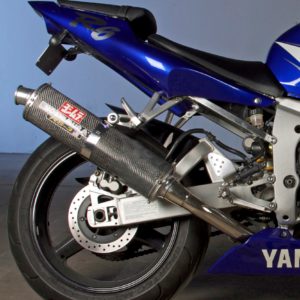
Watch Out For The Hot Exhaust
Rider - Two Up Tips
The things to remember to be a responsible rider with a pillion are:
• Don’t be a show off. Be considerate and ride safely! • Aim for that buttery smoothness in changes of speed and gears. This will reduce helmet knocks. •Build the pillion’s confidence so they’ll want to ride with you in the future. I repeat, don’t be a show off!
Responsibility Times Two!
Riding with a pillion can be one of the most fun and treasured experiences you can share with someone. Including them in your beloved hobby undoubtedly opens their eyes to the joys of being on a motorcycle, and riding together can build that unbreakable bond.
My final word has to be – just ensure you’re doing it safely. When the day is done, and the bike is on its stand, make sure you’re both standing too! Then you can do it all over again the next day…