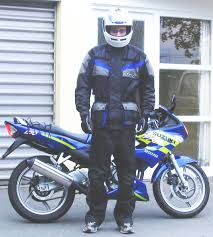
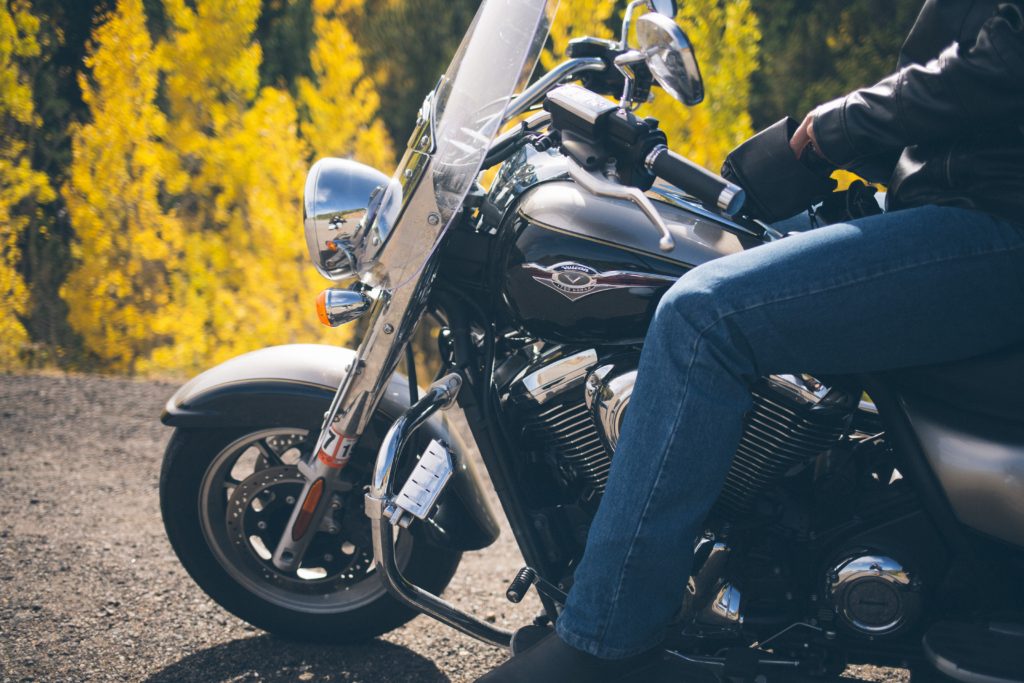
With so many factors to consider when choosing your riding gear, where do you begin? Safety, practicality, affordability? After taking all those things into account, let’s not forget how your gear affects your riding identity.
In an attempt to save you from bewilderment, I’ve put together some basic tips on how to choose your riding gear. I’ve listed important details to think about for each item, so you can be well-informed, and confident in your choices.
Decisions, decisions, decisions…
Helmets - Riding Gear
It almost goes without saying that this is the most important item you’ll be buying. Helmets are designed to protect your head and face from injury, and they are a legal requirement when riding in the UK.
In line with government regulations, all helmets worn in the UK must meet either: • British Standard BS 6658:1985, as well as carry the BSI Kitemark. • UNECE Regulation 22.05. • A European Economic Area member standard offering at least the same safety and protection as BS 6658:1985, and carry a mark equivalent to the BSI Kitemark.
The BSI Kitemark or UNECE ‘E-Mark’ should be displayed on the rear of the helmet, or on the strap.
UNECE ‘E-Mark’ on rear of helmet
Different Types
The 3 most common types of motorcycle helmet are Full Face, Open Face, and Modular (a.k.a. Flip Ups).
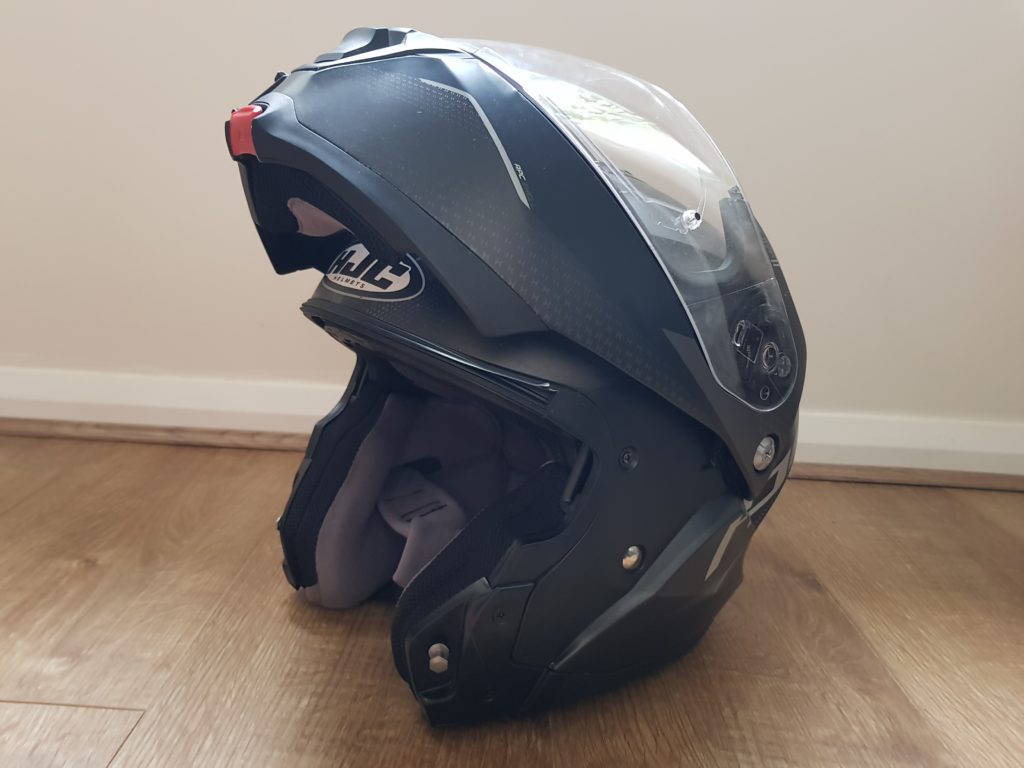
I wear a Flip Up because it offers better protection than an Open Face, and more flexibility than a Full Face. The downside to Flip Ups is how heavy they are in comparison to the other types.
Modular (Flip Up) Helmet
SHARP Rating
The Safety Helmet Assessment and Rating Programme are a helmet testing organization within the British government. They run 32 different tests on a magnitude of helmets, and score their safety rating based on the results. Five stars is the maximum rating achievable, and each model’s rating can be found on their website.
I can’t stress how important it is to choose the best fit for all your gear, especially your helmet! If it’s too loose, it will shake in the wind, or worse. If it’s too tight, you can get a headache, and become distracted. Bear in mind that different models will fit you better in different sizes. It’s possible you could be a medium in one helmet, but a large in another.
I was adamant on buying my first helmet in store, instead of online. That way, I was able to try on loads of models, in a range of sizes. Not only did this help me gauge how comfortable they were in terms of fit, but it also allowed me to get a sense of how heavy they were.
Materials
Thermoplastics, fibreglass and Kevlar are the materials used to make the outer shell of a motorcycle helmet.
Thermoplastics are the least expensive as they are cheaper to manufacture. This material isn’t as strong as the others, so the outer shell has to be thicker, which in turn, makes them weigh more.
Fibreglass helmets are slightly stronger, and lighter than Thermoplastics, but also cost more.
The highest quality helmets are made of Kevlar, as it is the most hardy of all these materials. Their construction process demands more from your wallet, but these lids are the best on the market, and they’re worth investing in.
Straps
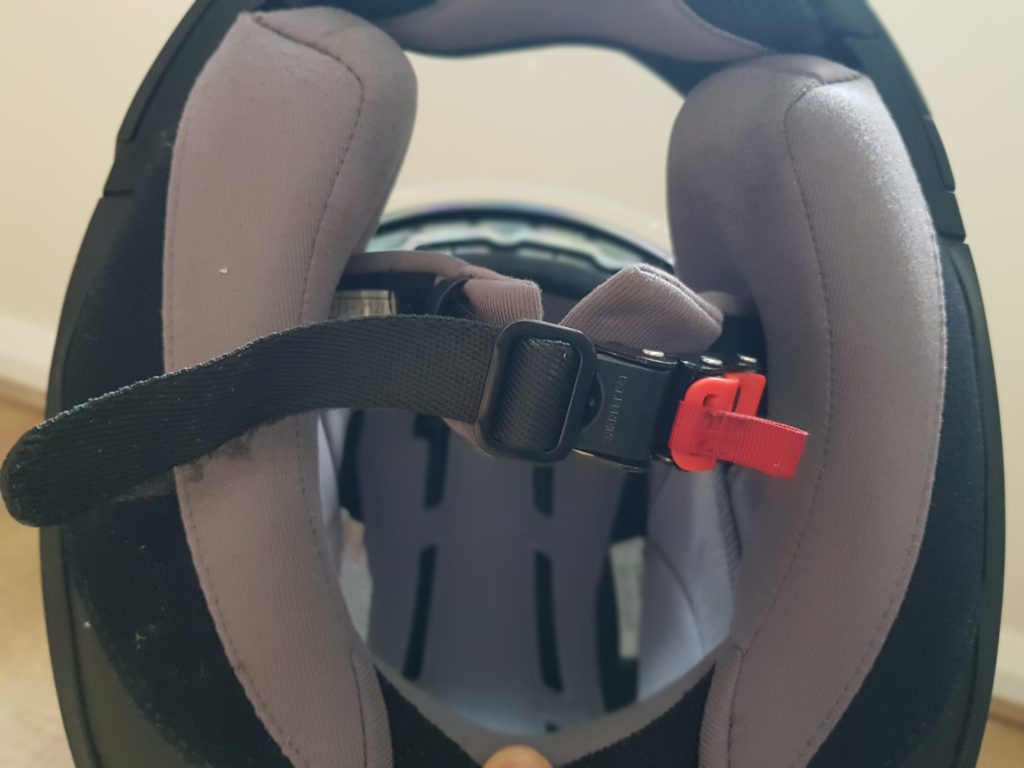
The way you fasten your helmet will depend on personal preference. Some have D-Ring buckles, and others have quick release straps.
Mine has a quick release strap and I can’t fault it. I can adjust how tight it is around my chin, and take it off without any hassle.
Quick Release Strap
Visor
Your field of vision will depend on the aperture of your visor, and in my humble opinion, the wider, the better. Pin-lock visors will add the benefit of fog prevention, by creating an airtight seal when your visor is down. Some helmets also have an extra shaded visor included, which is a handy option to have when the sun is out.
Ventilation & Noise Cancellation
Comfort is crucial, and the air-flow in your helmet will play a big part in that. Vents in various places will allow you to control the temperature within your helmet, usually by just sliding them open or closed. Fabric on the interior, and around the neck area, will reduce whistling sounds when you’re travelling at high speeds. Most brands test their helmets in wind tunnels to finely tune these aspects, as well as the helmet’s aerodynamics.
Jackets - Riding Gear
If you’re in the market for your first jacket, think long and hard about what your riding will entail. Do you plan to commute on a daily basis, or just take the bike out when the conditions are favourable? We know your jacket needs to protect you, but it also has to be versatile.
Armour
Your elbows, forearms, shoulders and back should all be protected with armour whilst riding. In some jackets, this will be adjustable, in most it will be static. Armour comes CE certified, either 1 or 2, where 2 is twice as protective. Kevlar and carbon fibre are common materials used, as they are more abrasion and impact resistant.
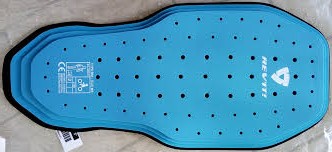
If a jacket doesn’t come with a back protector integrated between the fabric layers, it may have a pocket on the inside where one can be slid into. This gives you the choice whether to wear one or not, although that choice should be an easy one to make.
Back Protector
Sizing
Ideally, your jacket will allow for a full range of movements. You never want to feel restricted, or to feel tightness around your shoulders, abdomen, back, neck or arms. This can add fatigue, and cause aches in those areas. Not good for long rides!
Make sure you can bend your elbows properly, and lift your arms without pulling the jacket up over your waistline. Remember that optimal comfort will allow you to focus on the road, rather than your uneasiness.
Materials
Leather and textile mesh composite, are the fabrics motorcycle jackets are made of. Each has their own pros and cons.
Leather comes in different thicknesses. Improved protection comes from the thicker jackets, but they can get stuffy and hot. Poor waterproofing is the other disadvantage. Although they look stylish, and can last a lifetime, leather jackets are less versatile than their textile mesh counterparts.
Leather Jacket
Textile mesh composite jackets have numerous advantages. They tend to be lighter, more breathable and waterproof, whilst providing solid protection against abrasion. These jackets allow for more flexibility than leather jackets, and are easier to clean too. The drawback is that this material won’t last as long, and it is easier to burn.
Textile Mesh Jacket
I own one of each type of jacket, and alternate their use for different rides. For commuting, I use my textile mesh jacket, as conditions in the UK change from sun to snow in the course of 8 hours, and I want to be prepared for anything. On short rides I prefer wearing my leather jacket, because let’s face it, it looks pretty sweet!
Inner Lining
Not all jackets have removable linings, but those that do have several benefits. Firstly, they’re easier to clean. Secondly, you can make your jacket lighter by removing the lining. Thirdly, you can make your jacket better at retaining heat by keeping the lining in. Finally, inner linings can enhance the waterproofing qualities of your jacket.
Visibility
Reflective stripes, and bright colours will increase your road presence, and make you more visible to fellow road users. Darkly coloured jackets can be harder to notice whilst riding at night, and don’t afford you that additional safety.
Pockets
The convenience of large, secure pockets is invaluable when riding. You’ll soon accumulate things you need to have to hand, and that’s when those bad boys will save you bother and time.
Bottoms - Riding Gear
Safety and comfort, safety and comfort! Legs are no different to your torso and arms, and will require both of these two things to enhance your riding experience. In fact, in many aspects you’ll be wanting similar traits as you’ll find in a decent riding jacket.
Armour
Numbero uno priority is how much armour you have amigo. The same CE standards apply as they do with your jacket, and your protectors should be made of strong materials like Kevlar. The main area for coverage is the knee, and should be comfortable when you’re in your in your riding position i.e. not digging into you, or shifting position.
Sizing
Your bottoms need to cover the top of your boots when you’re in your riding position, but not be so slack that they flap around in the wind like the Union Jack. The right fit will allow for smooth braking, and gear shifts, without excess fabric getting in the way. The waistline shouldn’t be too tight and cause discomfort, but it does need to keep your bottoms up, so as not to expose any flesh.
Materials
As well as leather and textile mesh options like you have for jackets, you can also find denim bottoms. Plain old jeans are not suitable in terms of abrasion resistance, but some pairs of riding jeans will be interwoven with other materials in order to increase their protective qualities. Cordura is commonly used for riding pants, as it is particularly abrasive resistant.
Avoid ordinary jeans without armour
All materials should allow for plenty of ventilation, and flexibility. Cordura will be more waterproof than jeans and leather, and easier to clean. All types of these materials will have a wide price range.
Linings, Visibility & Pockets
Inner linings are optional within riding bottoms, and if included, can provide the same benefits as they do in a jacket – warmth, waterproofing and easy washing.
Just because your legs are tucked away generally, doesn’t mean the colour of your bottoms doesn’t matter. Noticeably bright riding gear is always preferable, even below the waist. Whereas jeans and leather tend to be dark colours, textile mesh bottoms can be luminous and reflective.
Pockets with zips are the best option for bottoms, as things are more likely to slip out than they are with your jacket. Velcro or button fastened are other examples, but they aren’t as safe or secure.
Gloves - Riding Gear
It might surprise you at how much you’ll gain from owning a proper pair of riding gloves. Your feet and hands control your motorcycle, so looking after your phalanges is imperative. Gloves offer protection in falls, but also from the elements. Cold hands when riding is no fun, so it’s worth figuring out how you can stop your digits from feeling the freeze, whilst giving you maximum protection.
Protection
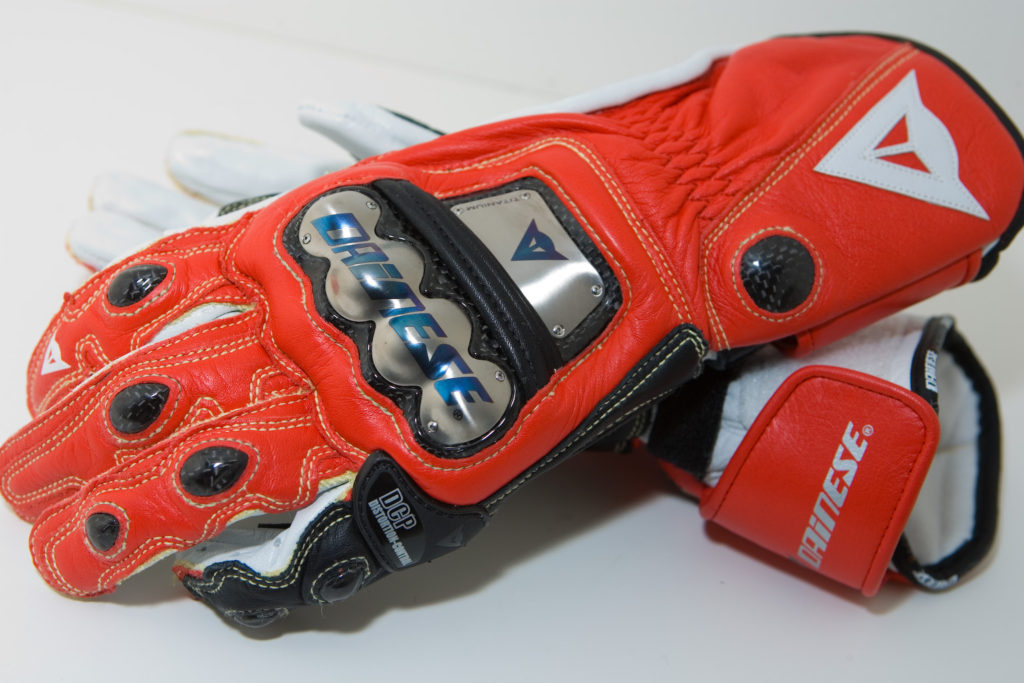
Knuckle protectors are a popular feature on riding gloves, adding abrasion and impact resistance, as well as preventing wind chill.
Leather Gloves with Knuckle Protection
Sizing
Jim Carey said it best – “Like a glove!”. In our language, that simply translates to ‘keep them snug’. You’ll want enough give in them to be able to clench your fist, but avoid ‘spare room’ at the tips of your fingers.
Materials
Leather is the safest material to choose when buying your gloves. The protective qualities are crucial in the event of a crash, as your hands will be the first things you try to fall onto. In this case, you’ll also want to find a pair where the stitching is not exposed. This will mean they’re harder to shred apart, which is the last thing you want happening.
Textile gloves could be more suitable for touring, as they offer better ventilation, without sacrificing protection. They also offer good flexibility, which you’ll need for operating your bike’s controls.
I wear leather gloves with knuckle protectors, and it’s only on a very rare occasion that my fingers start feeling cold. Travelling at high speeds makes them get cold faster, and this can be unpleasant, but I have no real gripes with my pair of leather gloves.
Boots - Riding Gear
What you wear on your feet, will probably endure the most wear and tear out of all your riding gear. With braking, gear changes, your exhaust pipe, and placing them on the floor, your riding boots will need to be made to last, and give you maximum protection.
Protection
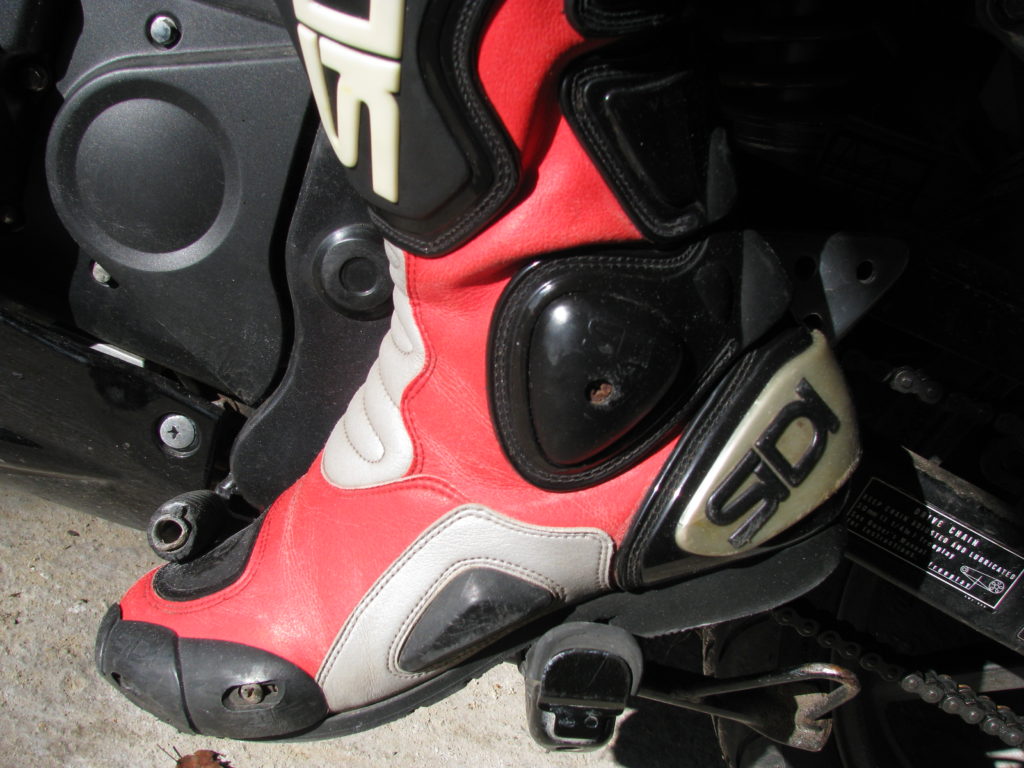
Steel plates around the toes, and ankle armour are what you’re looking for. Any extra padding on the interior is a bonus. On taller boots, shin protectors are also desirable.
Riding Boots with Ankle and Toe Protection
Sizing
It is extremely vital to get the right sized boots for riding. Poor blood flow due to tightness can lead to fatigue and soreness. Looseness can lead to irresponsive movements, and cause dangerous errors. Like gloves, your boots should be snug, but leave enough space for breathability and comfort. Check different sizes as you would with a helmet, and never assume your size will be the same across the board.
Materials
As you know by now, leather and textile are both well ventilated, and abrasive resistant. Leather boots are made of cow hide, and should be treated in order to make them more effective against the elements.
Soles can be hard or soft, depending on their use. Soft soles will offer a better range of movement, but hard soles will last much longer. All soles should be constructed with oil-resistant rubber, and they should be flat, as opposed to having heels of any height. Glued on soles should be avoided, and instead, stitched soles – which are more durable – should be worn.
When buying boots, keep in mind how they are secured. Laces can be hazardous, so Velcro options should be considered primarily. Some boots will have both, and for these pairs, you can tighten the boots using the laces, then tuck them away under the Velcro straps. Buckles are less commonly seen, but they are the fastener of choice on some riding boots.
Wearable Accessories - Riding Gear
The following pieces of riding gear are by no means essential, but some will bring your safety to a new level, and others will have practical benefits. Food for thought if you have extra needs, or fancy treating yourself.
Inflatable Airvests & Jackets
These don’t come cheap, but they are innovative, and one could save your life. A built in mechanism is designed to inflate the vest in the event of a crash, in less than a tenth of a second! It protects your neck, back and torso from impact like no other bit of riding gear. Some come inclusive with back protectors, and they are made out of abrasive resistant materials to extend the protection they provide.
Inflatable Airvest
For a better look at one of these vests, read my full review of the Helite Turtle 2 Airvest.
In the winter months, heated accessories are irreplaceable. Usually powered by charged batteries, these products can keep you cosy in even the worst conditions. Quality versions will be made of protective materials, and compliment your existing riding gear. Cheap versions will need to be plugged in, and won’t be constructed using robust materials.
If your helmet doesn’t come with a shaded visor, you may want to carry some sunglasses around with you. Reflections and glare can be immobilising when riding, and it’s important to be able to maintain your concentration at all times. If you want to see where you’re going while listening to music, there are also options with integrated headphones – a.k.a. soundglasses.
Backpacks - Riding Gear
There’s an area between pockets and full-blown luggage that you may need to address at some point. That’s where you’ll want a well-made backpack you can sling over your shoulders. These enable you to bring more of your belongings, without changing the form of the bike.
Backpack tips – look for as much space as you can get! Padded compartments will be especially useful for devices, and fragile items you may be travelling with. Also, think waterproof! If you get stuck in the rain, you don’t want your backpack absorbing all that wetness and ruining the contents inside it.
Base Layers, Neck Scarves & Socks
Base layers are worn underneath your other riding gear, and serve two purposes. They wick away sweat in hot conditions, to prevent you from becoming damp, and in cold conditions, they keep you warm. In other words, they inhale cool air, and insulate warm air.
A neck scarf is perfect for, well, protecting your neck. It keeps wind off your skin, and can block air flowing into the top of your jacket and bottom of your helmet.
Socks should slip comfortably inside your boots, and keep your feet warm in cold conditions. In warmer conditions, wear socks that allow your feet to breath, and prevent over-heating.
Were My Tips On Riding Gear Helpful?
All these tips were based on my personal experience, and research. I hope they helped clear the fog surrounding your head, and expel the vacant look in your eyes as you stare at row upon row of awesome riding gear! Remember, safety first, then comfort, practicality, affordability etc.
I’d love to know what you think of my tips, and if you have any products you’d like me to review, I’m ready and waiting! Either way, fill out a form on my Contact Me page, and I’ll get back to you in a flash.
Rider UK is a review website, and has no authority in health and safety when it comes to riding gear. All the above information is provided as experiential tips, and not recommendations or advice. My only recommendation is that you do extensive research, and consult safety standards professionals who can guide you further. Stay safe, enjoy the process, and thanks for reading.